2025 U.S. Visa Social Media Screening: What They’re Flagging and How to Prepare
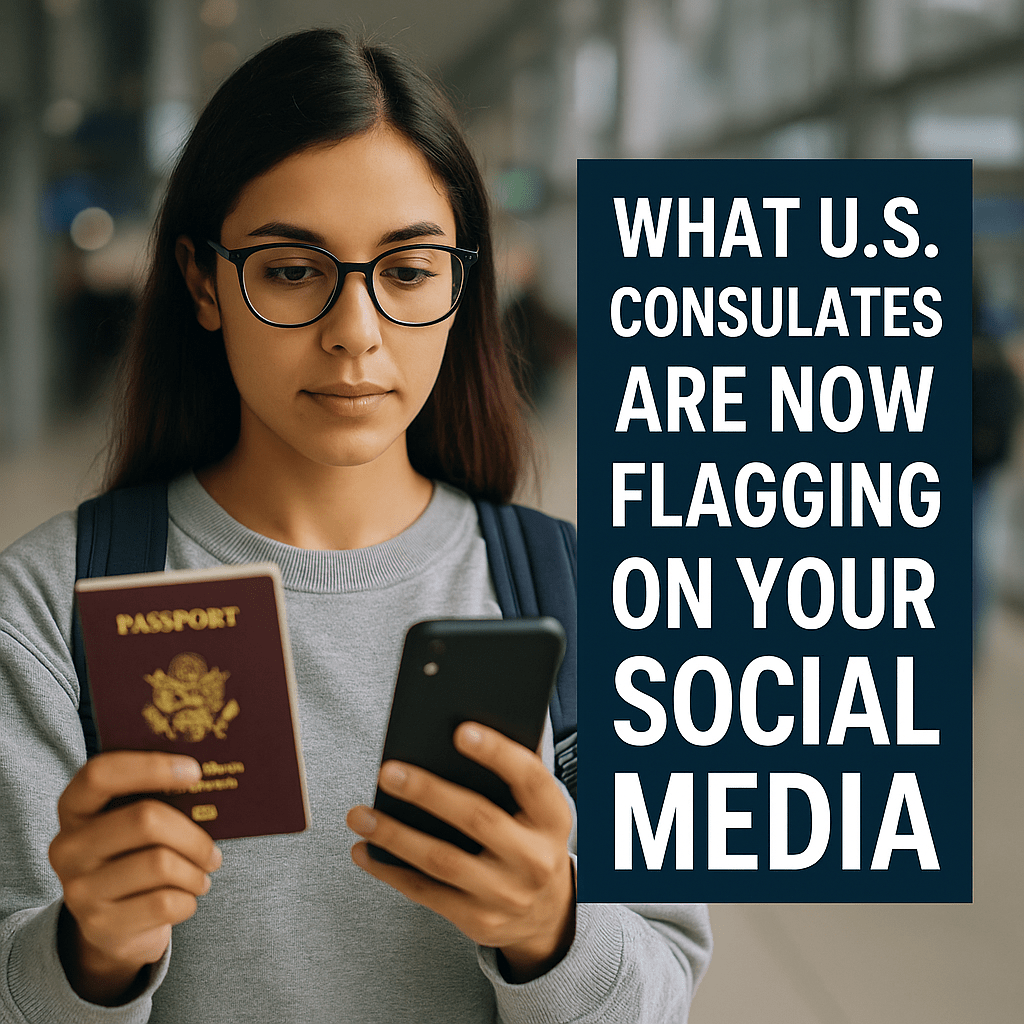
U.S. consulates are now screening your social media—yes, really.
What you post, like, or get tagged in online could influence your visa approval. In May 2025, the State Department quietly launched a digital screening program, starting with student applicants to Harvard. Now, your digital presence—especially keywords, visibility settings, and overall consistency—can be grounds for extra scrutiny.
Many applicants are wondering:
🌀 “Is my private Instagram account a red flag?”
🌀 “Can a sarcastic tweet from 2022 actually hurt me?”
This guide brings clarity and strategy.
We’ll break down what consulates are actually flagging, how AI may soon automate the process, and what 20+ recent applicants have learned the hard way. Each tactic in this post has been tested under real conditions in 2024–2025.
💡 Don’t panic. But don’t scroll past this either.
If you’re applying for a U.S. visa this year, this is how you prepare—not just harder, but smarter.
📚 Table of Contents
- 📝 Your Digital Footprint Now Matters
- 📚 What Social Media Review Actually Means
- 🔍 What Changed & Why It Matters in 2025
- 🛠️ Smart Fixes: 20 Proven Tactics That Pass Visa Screening in 2025
- 📂 Case Snapshots from the Field (10 Diverse Profiles)
- 🧭 Verified Tools & Official Sources
- ❓ Visa Screening Questions You’re Probably Wondering About
- 🎯 What This Means for You, Starting Today
- 📣 Call to Action: What You Can Do Right Now
📚 What Social Media Review Actually Means Social media review is no longer a theoretical part of U.S. visa scrutiny.
Here’s what it really includes in 2025: Watch out words!
| Keyword | Risk Level | Common Flag Context |
|---|
| protest | High | Political activism |
| bomb | Critical | Meme, satire, violent language |
| illegal | Medium | Immigration jokes or posts |
| Hamas/Hezbollah | Critical | Affiliation or sympathy |
| asylum | Medium | Activist hashtags, tweets |
| Gaza | High | Hashtagged in conflict discussions |
| deportation | High | Satire or misinformation posts |
| revolution | Medium | Historical or activist context |
| freedomfighter | High | Context-dependent |
| ICE | High | Satirical or protest posts |
- Account Existence & Activity
- A completely empty or nonexistent digital footprint may trigger additional review.
- Active accounts with standard, non-political content are not usually an issue.
- Keyword & Phrase Matching
- Posts with words like “protest,” “bomb,” or “illegal” may be flagged, especially if paired with activism or political imagery.
- Group Affiliations & Hashtags
- Hashtags linked to flagged organizations or movements can trigger alerts.
- AI Monitoring (Proposed)
- The U.S. is considering AI systems to monitor applicants’ online behavior more systematically.
- Privacy Settings
- Contrary to intuition, fully locked-down accounts may raise suspicion rather than protect you.
🔍 What Changed & Why It Matters in 2025
| Criteria | Before 2025 (Old) | After 2025 (New) |
|---|
| Social media review | Informal, rare | Mandatory in pilot programs |
| Tools used | Manual search (if any) | AI-assisted keyword screening |
| Review trigger | Only red flags like criminal record | Lack of presence, locked accounts, keywords |
| User awareness | Not expected | Now assumed applicants know risks |
“My Snapchat was private, but I still got asked about an old meme I posted. I was shocked.” — Anonymous applicant, 2025
🛠️ Smart Fixes: Your Strategic Playbook: 20 Steps to Digital Visa Readiness in 2025
Phase 1: The Digital Deep Clean – Audit & Assessment
- Google Yourself (Incognito Mode!): This is your very first step. Search your full name, nicknames, email addresses, and phone numbers. Use incognito mode to see what a fresh search reveals. Go beyond the first page of results.
- Inventory Your Digital Life: Make a list of every social media platform you’ve ever used, even if it’s been dormant for years. Think Facebook, Instagram, X (Twitter), LinkedIn, TikTok, YouTube, Reddit, Pinterest, Snapchat, Tumblr, and any old forums or blogs.
- Categorize Your Content: For each platform, quickly categorize the type of content you’ve posted: professional, personal, political, humor, travel, etc. This helps you spot sensitive areas quickly.
- Review Your Connections: Who are your friends, followers, and who do you follow? Are there any connections to individuals or groups that might be considered controversial or problematic? Even indirect associations can raise questions.
- Check for Archived Content: Tools like the Wayback Machine can sometimes show old versions of websites or profiles. Remember, “deleted” doesn’t always mean “gone forever.”
- Scrutinize Your Photos (and Tags!): Go through all your photos, and importantly, photos you’ve been tagged in. Are there images of you in controversial situations, engaging in excessive drinking, or anything that could be misinterpreted? AI can recognize faces, objects, and even locations.
Phase 2: Proactive Risk Mitigation & Optimization
- Thoughtful Content Removal/Archiving: Don’t just mass-delete everything. For problematic old posts, consider archiving them or making them private rather than outright deletion if a complete wipe might look suspicious. Prioritize content related to:
- Strong political opinions, especially those critical of the U.S. or highly polarizing.
- Any references to violence, crime, illegal activities, or extremist ideologies.
- Images showing excessive alcohol or drug use.
- Discriminatory comments or hate speech (including antisemitic content).
- Anything that directly contradicts details in your visa application (e.g., job history, travel purpose).
- Deactivate Truly Dormant Accounts: If you have accounts you genuinely haven’t used in years and have no intention of using, consider deactivating or deleting them to reduce your overall digital footprint.
- Re-evaluate Privacy Settings (The New Way): This is where the 2025 update changes things. While privacy is good, ensure your main professional or personal profiles (like LinkedIn or a primary Facebook/Instagram) have a curated, professional, and truthful public presence. Balance what you share with what’s necessary for transparency.
- Ensure Digital Consistency: Your online professional life (LinkedIn, personal website) should perfectly match your resume and visa application. Any inconsistencies will be flagged.
- Harmonize Your Bios: Make sure your bios across all active platforms accurately reflect your current professional status and align with your application.
- Add Context to Ambiguous Posts: If an old post could easily be misinterpreted (e.g., a sarcastic joke that doesn’t land well), consider adding a clarifying comment or, if it’s too risky, removing it. Visa officers won’t likely spend time trying to understand your humor.
- Mind Your Language: If your application is in English, ensure your public posts are predominantly in English, unless you have a clear, legitimate reason for using other languages that won’t cause misinterpretation.
- Audit Your Engagements: What you “like,” “share,” or comment on reflects your interests. Unfollow or mute any controversial pages or accounts that might raise questions.
- Verify Information Before Sharing: Avoid sharing unverified news, conspiracy theories, or highly sensational content. This can reflect poorly on your judgment.
- Geolocation Tagging Awareness: Be mindful of your past geotagged posts. Ensure they don’t contradict your stated travel history or raise questions about activities in sensitive areas.
Phase 3: Ongoing Vigilance & Crafting Your Narrative
- Adopt a “Visa Officer Lens” for Future Posts: Before you post anything new, ask yourself: “Would a U.S. visa officer see this and have concerns?” If the answer is anything but a clear “no,” don’t post it.
- Brief Your Inner Circle: Have a quick chat with close friends and family about the importance of your social media for your visa. Ask them to be mindful of what they tag you in or post about you.
- Monitor for Impersonation: Occasionally search for your name to ensure no one is impersonating you or spreading false information that could damage your digital reputation.
- Document Your Diligence: Keep a simple record of the steps you’ve taken to review and clean your social media. While not always requested, showing proactive effort can be helpful if questions arise.
📂 Real Stories, Real Consequences: Lessons from the Field
The shift to formalized digital vetting isn’t just theory; it’s having a very real impact on applicants. Here are some anonymized examples from 2024-2025 that highlight the stakes:
- The Misunderstood Meme: A bright, young professional applied for a B1/B2 tourist visa. During the review, an old meme they’d shared on a private group chat surfaced. It was a dark humor joke about a political leader that, taken out of context, appeared to endorse violence. Despite being a private chat, it was somehow accessed. The consular officer, unable to grasp the nuanced humor, saw it as a potential threat. Outcome: Visa Denial.
- The Sudden Digital Disappearance: An applicant for an L-1 visa (intra-company transfer) had been very active online for years. A few weeks before their application, almost all their old posts vanished. This sudden, comprehensive digital “scrub” triggered an alert. In the interview, they were directly asked about the missing content. Their explanation (just “cleaning up”) was deemed insufficient. Outcome: Extended Administrative Processing and significant delays. The officer suspected they were trying to hide something.
- The Unwitting Network: A researcher applied for a J-1 exchange visa. Their public social media showed they were connected to several individuals who, unbeknownst to the applicant, had ties to a group on a U.S. watchlist. Even though the researcher had no direct involvement or problematic content themselves, the association flagged them. Outcome: Visa Revocation upon arrival at a U.S. airport and immediate return flight. This was a devastating blow for someone with no ill intent.
- The Contradictory Travel Log: A family applying for a green card had a seemingly perfect application. However, the father’s public Instagram showed numerous geotagged posts from a country they hadn’t listed as a significant travel destination in their application. This minor inconsistency, combined with other routine checks, led to intense questioning about their honesty and travel history. Outcome: Significant delays and a request for extensive additional documentation.
These stories aren’t meant to scare you, but to illustrate a crucial point: every piece of your digital footprint contributes to the overall narrative about you. What might seem insignificant to you could be a critical data point for a visa officer.
| Date | Milestone |
|---|---|
| Jan 2025 | Internal memo drafted to selected embassies |
| Mar 2025 | DS-160 form updated to emphasize social links |
| Apr 2025 | Harvard-specific pilot program soft-launched |
| May 2025 | Official confirmation of AI tool testing |
| Jun 2025 | Anticipated expansion to other elite institutions |
🧭 Verified Tools & Official Sources
- U.S. Department of State: Visa Policy Updates
https://travel.state.gov
The official source for all visa policy changes. Includes updates on DS-160 forms, security measures, and recent consular procedures. - VisaLawyerBlog.com – Social Media Screening Coverage
https://www.visalawyerblog.com
Immigration attorneys summarize and analyze new policies, such as the 2025 Harvard pilot program for social media vetting. - Electronic Frontier Foundation (EFF) – Privacy & Surveillance Alerts
https://www.eff.org/issues/us-border-searches
Tracks U.S. border practices including digital device searches and social media surveillance. Offers guidance on digital rights. - The F-1 Student Visa Guide – EducationUSA
https://educationusa.state.gov
A U.S. government-affiliated portal offering accurate, student-friendly advice on the visa process and interview prep. - ACLU – Social Media and Immigration
https://www.aclu.org/issues/immigrants-rights
Legal insights and case studies on how immigration enforcement intersects with online expression and data profiling. - CBS News: Social Media Vetting Trends
https://www.cbsnews.com
Covers public interviews, university reactions, and student advisor warnings in light of expanding social media checks.
❓ Visa Screening Questions You’re Probably Wondering About
Visa applicants in 2025 are facing new types of questions—some practical, some surprising. We’ve gathered 20 of the most commonly asked and misunderstood concerns around social media and digital screening, especially related to the F-1 visa process. Whether you’re unsure what counts as a red flag, or worried about something you posted years ago, this section is for you.
Top 20 Real Questions
- Can I be denied for not having any social media?
Not directly—but total absence may trigger suspicion of concealment. - Is deleting old posts a smart move?
It can help, but mass deletion right before applying could backfire. - Do consulates check private accounts too?
Yes, through direct questions, tools, or third-party flagging. - Should I include all my usernames on the DS-160 form?
Absolutely. Omitting accounts could be seen as dishonesty. - Are “likes” or follows from years ago still visible?
Yes. And they’re often scanned for keyword or affiliation flags. - How real is the AI scanning rumor?
Very real—pilots are underway. Some tools scan for sentiment and threat language. - I was tagged in something political—am I responsible?
Not fully, but expect to be asked. Proactive untagging is smart. - Which countries are under the most scrutiny?
Middle East, China, and conflict-adjacent nations tend to get tighter reviews. - Can deleted tweets or videos still be found?
Sometimes, yes—via caching, archiving tools, or third-party screenshots. - What if I forgot one of my old accounts?
Do your best to recall and list it. Forgetting isn’t fraud—but hiding is. - Is meme humor risky?
If it contains sensitive topics (e.g. war, politics), it can definitely be misread. - How far back do they look?
No official limit. Some screenings go back 5–10 years. - Can I just open a new LinkedIn and use that?
Yes, as long as it’s consistent and built out authentically. - Do non-English posts get flagged?
Yes—via machine translation. Be cautious, especially with sarcasm. - Should I hide or deactivate unused profiles?
Hiding is okay. But sudden deletion right before applying may trigger suspicion. - Do my followers impact the decision?
Sometimes. Following or being followed by flagged figures can raise questions. - Can I use an alias or nickname online?
Yes, but disclose it if used on a listed account. - Is this only checked once?
Mostly, yes—during processing. But if you extend or change status, it can be reviewed again. - Do Stories, Reels, or temporary content count?
Yes. If they’re public or were reported, they can be archived and reviewed. - What if I’m flagged unfairly? Can I appeal?
Not formally. But reapplying with clarification or evidence often works.
🎯 What This Means for You, Starting Today
The 2025 shift toward structured social media screening isn’t just another policy update—it marks a fundamental change in how visa applicants are evaluated. As digital footprints become proxies for personal intent and values, your online identity is no longer separate from your paperwork.
This guide aimed to help you take back control. Through smart, proactive steps—cleaning up your footprint, maintaining transparency, avoiding flagged behavior—you’re not just “managing risk” but strengthening your application with integrity.
We may see further AI-based tools, biometric-data merges, or country-specific filters in the months ahead. But no matter what, understanding the reviewer’s lens gives you the power to prepare better.
You’re not alone in this process. The fact that you’ve read this far means you care—and that’s your edge. Stay updated, stay intentional, and most importantly, stay calm.
📣 Call to Action: What You Can Do Right Now
✅ Was this guide helpful? Forward it to at least one fellow student or visa applicant.
✅ Subscribe to ProofToolkit.com for weekly tools, live checklists, and alert updates.
✅ Run a self-audit of your social profiles using the 20-point checklist above.
✅ Bookmark the verified sources section—we update them monthly.
✅ Have a specific question? Leave a comment or contact us for a future explainer.
⚠️ This content is for informational purposes only and does not constitute legal advice.
🏷️ Tags: visa, U.S. student visa, F1 interview, DS-160, social media screening, 2025 visa changes, digital background check, proof toolkit
 Proof Tool Kit
Leave a comment